

Contents
What?
The European Union announced retaliatory tariffs on US goods worth a total of €93 billion. Brussels is responding to the US administration's protectionist actions, including previous tariffs on steel and aluminum.
Why?
The tariffs are intended to protect European companies from unfair competition, maintain trade balance, and demonstrate member state unity amid rising transatlantic tensions.
Who's it for?
Online store owners, companies exporting to the US, international trade managers, and anyone tracking the changes impacting supply chains and economic policy in the digital world.
Background:
The trade conflict between the EU and the US has been ongoing since 2018, when the Donald Trump administration decided to impose tariffs on steel and aluminum. The EU is now responding with the largest retaliatory package in its history, covering industrial, agricultural, and luxury goods. While these actions may exacerbate trade relations, they are also intended to increase the resilience of the EU economy and pressure the US administration to negotiate.
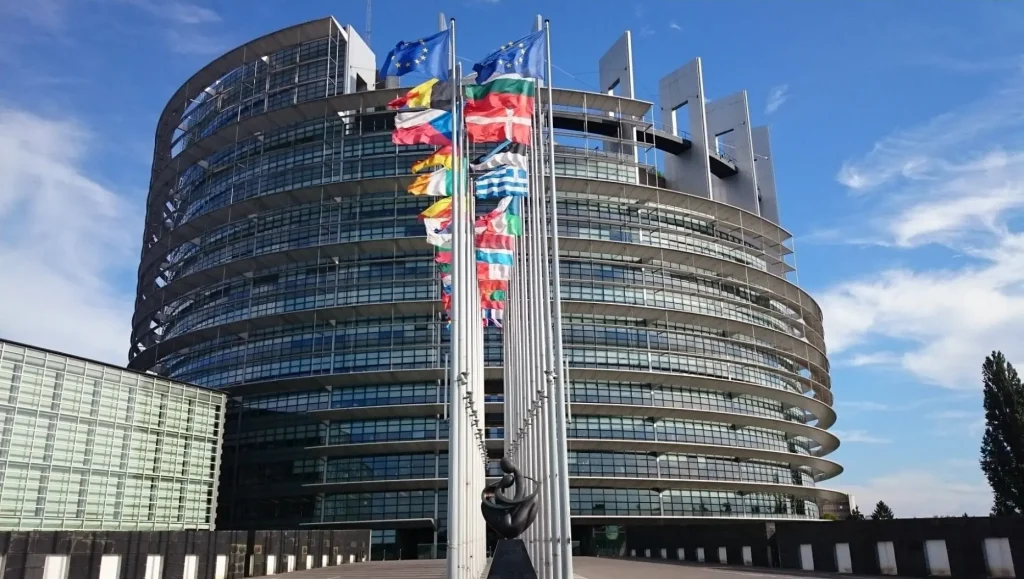
In response to growing trade tensions between the United States and the European Union, Brussels has taken decisive action. EU authorities announced the introduction of retaliatory tariffs on selected American goods. This is a direct response to the Donald Trump administration's decision to impose additional levies on steel and aluminum products.
The US decision sparked concern among European producers and consumer fears about possible price increases and supply chain disruptions. The EU, seeking to protect its economic interests, has adopted specific measures aimed not only at reacting to but also at counteracting the effects of the US restrictions.
Retaliatory tariffs are not just a symbolic gesture but part of a broader trade strategy. In practice, they mean:
Protecting European businesses from unfair competition from the US.
Sending a clear signalthat the EU is able and willing to defend its interests.
Maintaining balance in an increasingly volatile global market.
, European Commission President Ursula von der Leyenemphasized that the introduction of tariffs is not a choice, but a necessity. Her words were intended not only to highlight the gravity of the situation but also to demonstrate the unity and determination of member states in the face of pressure from overseas.
While Brussels' decision may be perceived as defensive, it carries a real risk of escalating the trade conflict. The question is whether these actions will open a new chapter in transatlantic relations or deepen the existing stalemate.
One thing is certain – the future of the EU-US trade negotiations remains uncertain, and their outcome could have far-reaching consequences for the global economy in the coming years.
The European Union's decision and its justification
The European Union has decided to impose retaliatory tariffs on selected goods originating in the United States. This is a response to the US administration's actions, which it considers disproportionate and detrimental to Europe's economic interests. The European Commission, representing all member states, has proposed imposing tariffs on products worth a total of €93 billion – a significant figure that underscores the scale of the response.
The goods subject to customs duties include:
Passenger cars and vans – a key sector of the US automotive industry.
Aircraft – an important element of technological exports.
Medical devices – products of great importance to the health sector.
The purpose of the tariffs is not limited to offsetting the effects of US tariffs. They also aim to:
Protecting the stability of the EU internal market,
Maintaining the competitiveness of European companies,
Strengthening community solidarity in the face of external pressure.
Brussels is sending a clear signal: the EU can act collectively and decisively when its interests are threatened.
The role of the European Commission in preparing customs duties
The European Commission played a key role in developing and implementing retaliatory tariffs against the US. As the EU's executive body, it is responsible for conducting a common trade policy, which aims to protect the economic interests of the entire community.
At the center of these efforts was Maroš Šefčovič, the European Commissioner for Trade. He:
conducted negotiations with international partners,
coordinated activities with Member States,
supervised the legislative process related to the introduction of customs duties.
Its activities demonstrate that the European Commission plays a decisive role in responding to international tensions and building a coherent trade strategy for the entire EU. Without such coordination, an effective response would be impossible.
Ursula von der Leyen's speech and justification for the actions
Ursula von der Leyen, President of the European Commission, clearly and forcefully justified the decision to introduce retaliatory tariffs in her speech. Her main message was:
"We must protect European companies and jobs. Without it, we risk too much."
She also emphasized that disruption of transatlantic supply chains could have negative consequences not only for producers but also for consumers – both in Europe and the US. Her speech aimed to:
showing the Union's determination to defend its interests,
building trust among European entrepreneurs,
signaling a willingness to make difficult decisions in the name of long-term stability.
This speech was not only a political statement, but also a manifesto of the unity and strength of the European community.
The importance of the decision for EU trade policy
The introduction of EU tariffs is not just a response to US actions—it also marks the beginning of a possible redefinition of the European Union's trade policy. In the face of a changing world, the EU must adapt its approach to global trade.
Although in the short term there may be negative effects such as:
higher prices for some products,
decline in the competitiveness of companies,
a greater burden on consumers,
in the long term this decision may bring benefits in the form of:
strengthening the resilience of the EU economy,
increasing self-sufficiency,
reducing dependence on external partners.
This is a watershed moment. The decision on tariffs could set a new direction for EU trade policy – more assertive, but also more thoughtful and balanced. Sometimes, you have to react sharply to be able to act wisely later.
The origins of the trade conflict with the US
The trade conflict between the United States and the European Union began with the Donald Trump administration's decision to impose tariffs on steel and aluminum. The official goal was to protect American industry from foreign competition. However, Brussels viewed this as an unjustified attack on the European economy. In response, the European Union introduced retaliatory measures, igniting a long-running dispute that continues to impact transatlantic relations. This conflict shows no signs of ending anytime soon.
Tariffs introduced by the Donald Trump administration
In 2018, President Trump announced tariffs of 25% on steel and 10% on aluminum imported from European Union countries. The official justification was to reduce the US trade deficit and support domestic producers. However, for European companies – especially German steel mills – this meant serious consequences:
Decrease in the competitiveness of their products on the American market
Sharp decline in exports to the US
The need to quickly change the sales and logistics
Financial problems for companies that have spent years building their position overseas
Not all businesses have coped with this sudden change in market conditions.
US-EU Tariff Reciprocity Strategy
The Trump administration used tariffs as a leverage tool in trade negotiations. The argument was that since the EU had been running a trade surplus with the US for years, a balance should be sought. However, instead of opening up dialogue, these actions triggered a chain reaction:
Brussels responded with its own tariffs, hitting symbolic American goods.
The list includes motorcycles, bourbon, and other culturally significant products.
Trade tensions between transatlantic partners
The global market reacted nervously, which increased economic uncertainty.
Although the intention was to strengthen the US position, the effect was the opposite – deepening the conflict and destabilizing trade relations.
Key commodities targeted by U.S. tariffs: steel and aluminum
Steel and aluminum have become symbols of the trade war between the US and the EU. For exporters from Poland, Germany, and Sweden, this meant:
Increase in export costs to the United States
The need to quickly reorganize the sales strategy
Loss of competitiveness in a key market
Paradoxically, American manufacturers have also felt the impact of these decisions, as many of them relied on imported raw materials. In the long term, this could lead to a transformation of global supply chains. We're already seeing:
Growing interest in Asian markets as an alternative to exporting to the US
Changes in trade directions and diversification of economic partners
Is this the beginning of a new chapter in global trade? Time will tell, but one thing is certain: the effects of this trade war will be felt for years to come.
Scope and structure of EU retaliatory tariffs
In response to the United States' protectionist trade policies, the European Union took decisive action. It introduced retaliatory tariffs, the scope and structure of which were carefully planned. The European Commission developed a detailed list of goods covered by these measures—from raw materials and agricultural products to consumer goods.
The main goal of these actions is not only to protect the economic interests of the Member States, but also to send a clear signal: the European Union is able to defend the principles of free trade and maintain balance in international relations.
67-page list: details of covered products
One of the key elements of the EU's strategy is the 67-page tariff list. This document, prepared by the European Commission, provides a precise list of goods subject to additional tariffs. These include:
Luxury diamonds – a symbolic choice, striking at luxury goods exported from the USA.
Agricultural products – such as eggs and poultry, which are a significant export from some US states.
Raw materials – including soybeans, the export of which is of strategic importance to American agriculture.
This wide range of products demonstrates the complexity of trade relations between the EU and the US. The imposition of tariffs on agricultural products is particularly significant – a deliberate move targeting US regions heavily dependent on exports of these goods. Brussels knows exactly where to strike to achieve the desired effect.
25 percent tariff as the main customs duty
The most common rate under the EU's retaliatory tariffs is the 25% tariff. It covers most products on the list and serves a dual purpose:
Protects European producers against unfair competition.
Compensates for losses resulting from US customs barriers.
However, the European Union doesn't act impulsively. In cases where the market is more sensitive, it applies lower tariffsto avoid overburdening consumers. This demonstrates Brussels's prudent and flexible approach —not just retaliation, but also economic responsibility.
The 10 percent tariff and its application
The second tool in the EU's arsenal is a 10% tariff, applied to selected product groups. This is a more balanced approach that allows for a tailored response to the specific needs of a given sector.
A lower customs duty rate brings a number of benefits:
Reduces costs for European companies that import components from the US.
It protects consumers against sharp price increases for everyday products.
Maintains pressure on the trading partner without escalating the conflict.
Prevents disruptions to critical supply chains.
For example, products essential to European industry, the lack of which could seriously disrupt production, could significantly disrupt the EU's response to US actions. The European Union is responding to US actions with sensitivity and precision, adapting its measures to economic realities.
Agricultural products: poultry, soy, beef, sugar
In response to trade actions by the United States, the European Union has imposed retaliatory tariffs on key agricultural productssuch as poultry, soybeans, beef , and sugar. The aim of these measures is to protect European farmers from the effects of unfavorable decisions from overseas.
Poultry , a pillar of the EU agricultural sector, has been prioritized for additional levies. These levies are intended to compensate local producers for potential losses resulting from US tariffs.
Soybeans, which will also be subject to tariffs starting December 1, 2025 , play a key role in the feed and food industries. Protecting them is not only an economic issue but also a strategic security concern.
Beef and sugar complete the list of products covered, which shows that the European Union is acting decisively, defending the interests of local producers and sending a clear signal: there will be no leniency for unfair competition.
Luxury and industrial products: yachts, cars, airplanes
The actions in the agricultural sector didn't stop there. Retaliatory tariffs also targeted luxury and industrial products, such as yachts, cars , and airplanes. The aim is to protect European companies from the effects of US actions that could disrupt market balance.
Yachts – a symbol of luxury and status – have been subject to tariffs to offset the impact of US restrictions on the European market for exclusive goods.
Cars —especially their parts—have already fallen victim to US tariffs. Now the EU is responding in kind, directly addressing the trade policies of the Donald Trump administration.
Aircraft —one of the pillars of Europe's high-tech industry—have also come under the spotlight. The imposition of tariffs on them signals that the EU will not passively stand by as threats to strategic sectors arise.
Exclusions from the List: Whiskey and Fears of Retaliation
Whiskey was also included on the list of potential goods subject to tariffs , but was ultimately removed. The reason? Brussels' fears of retaliation from the US , which could harm European alcohol producers.
This exclusion is an example of cool calculation and diplomatic caution. On the one hand, the EU demonstrates its ability to act decisively, while on the other, it leaves room for negotiation. Fears of a reaction from American alcohol companies have prompted Brussels to exercise caution to avoid an escalation of the conflict, which could harm both sides.
The stakes are high – not just about tariffs, but about the future of global trade relations. Will the EU's balanced approach prove effective? Time will tell.
Customs implementation schedule
The European Union is consistently implementing its plan to introduce retaliatory tariffs —this is not a spontaneous decision, but part of a well-thought-out strategy. The primary goal is to protect the common market from the effects of US tariffs. This process has been divided into stages, allowing for:
European businesses to adapt to new commercial realities,
better control potential disruptions in international trade,
minimize negative impacts on consumers and producers on both sides of the Atlantic.
The gradual implementation of customs duties is also a signal that the EU is acting responsibly and prudently, and not under the influence of emotions.
Customs duties effective from May 16, 2025
Starting May 16, 2025, the European Union will introduce tariffs on selected products originating in the United States. This is a response to previous actions by the US administration that negatively impacted the EU economy. The new tariffs are intended to:
restoring balance in trade relations,
protecting the interests of European producers,
strengthening the position of industries most exposed to the effects of protectionism.
The following sectors will be particularly affected:
automotive,
steel industry.
These are the industries that have already felt the effects of US trade restrictions.
Next phase from December 1, 2025
The second phase of tariff implementation will begin on December 1, 2025. This time, it will cover additional American goods , with a particular emphasis on agricultural products. The list includes:
soy,
almonds.
This step aims to:
strengthening the position of European farmers,
reducing dependence on imports from the US,
securing the internal market against destabilization.
It's worth noting that before expanding the list of products subject to tariffs, a detailed impact analysis was conducted on the EU market. This confirms that the EU's actions are based on data and analysis, not emotion.
The significance of the date August 1, 2025 in the context of negotiations
August 1, 2025, could prove to be a turning point in trade relations between the European Union and the United States. A tariff agreement. If negotiations are successful, it will be possible to:
avoiding another wave of US tariffs on European goods,
easing trade tensions,
stabilizing transatlantic relations.
As Ursula von der Leyen, President of the European Commission, emphasized, this deadline is crucial for the future of European trade policy. The coming months will be decisive—both for the economy and for international relations.
Retaliatory tariffs worth €93 billion
The European Union is introducing retaliatory tariffs totaling €93 billion —one of the most decisive steps in the history of EU trade policy. All member states unanimously supported this move, underscoring its importance and the cohesion of the community. The aim is to put pressure on the United States to return to the negotiating table.
The €93 billion figure is impressive—and with good reason. It's a clear signal that Brussels takes protecting the EU's economic interests seriously . The European Commission played a key role throughout the process , preparing and approving the package, confirming its dominant position in trade policy.
Comparison with the previous €26 billion package
By comparison, in March 2025, the European Union announced a €26 billion package of retaliatory tariffs . This was also a response to the US tariffs, but the scale of the measures was much smaller at the time .
Date | Package value | Objective |
|---|---|---|
March 2025 | 26 billion euros | Reaction to US tariffs |
Currently | 93 billion euros | Pressure on the US, return to talks |
The current package is more than three times larger than the 2025 one—that speaks for itself. Europe is no longer a passive observer. The European Commission, which has already demonstrated decisiveness, is now asserting its strength even more clearly. The European Union is demonstrating its ability to firmly defend its interests and not hesitate to take decisive measureswhen the situation calls for it.
Reactions and political actions in the EU
In the face of growing trade tensions between the European Union and the United States, European policy responses have taken diverse forms. However, they share a common goal: resolutely protecting the EU's economic interests. The European Commission has played a key role in this process, developing concrete responses to the US tariffs.
Importantly, the Commission's actions are not limited to responding to current threats. They also send a clear signal to global partnersthat the EU does not intend to passively observe attempts to exert pressure. On the contrary, it demonstrates its ability to speak with one, decisive voice, especially when its position on the global economic stage is at stake.
Maros Sefcovic's role as Trade Commissioner
Maros Sefcovic, as Trade Commissioner, is emerging as a key figure in the dialogue with the U.S. administration. His responsibilities include not only coordinating EU action in response to U.S. tariffs, but also building a long-term trade strategy aimed at:
maintaining the competitiveness of the European economy,
strengthening its independence,
ensuring stability in a changing international environment.
Working in close cooperation with the European Commission, Sefcovic aims to develop solutions that will, on the one hand, minimize the effects of American protectionismand, on the other, strengthen the EU's position as a reliable and predictable trading partner.
His role is like that of an orchestra conductor – he must integrate the interests of the 27 member states into a single, coherent strategy that will be effective on the international stage.
Contribution of the Polish Presidency of the EU Council
The Polish Presidency of the Council of the European Union plays a crucial role in maintaining unity among member states, particularly in the context of their response to the actions of the United States. By coordinating meetings of trade ministers, Poland aims to build a common negotiating frontthat will enable the EU to speak with a unified voice on the international stage.
Cooperation with the European Commission in this area:
strengthens the internal solidarity of the Community,
increases the EU's negotiating power,
shows that Poland can effectively combine national interests with EU goals.
An example of such action is the initiative to organize an extraordinary trade summit, which enabled a rapid exchange of opinions and the development of a common strategy. As a country of growing importance within the EU, Poland is demonstrating its ability to act efficiently, with initiative, and vision.
Possibility of using the ACI instrument by the European Commission
In response to increasing economic pressure from the United States, the European Commission is considering using the Autonomous Commercial Instrument (ACI). This tool allows for rapid and autonomous action in crisis situations, without the need for lengthy consultations.
ACI can play a key role in the retaliatory strategy because it provides the EU with:
flexibility in responding to dynamic changes,
possibility of immediate action,
real influence on shaping the rules of global trade.
While the decision to launch it has not yet been made, the mere willingness to use it sends a strong signal to external partners: the EU is not only analyzing the situation but is also prepared to take decisive action. At a time when trade tensions can escalate by the day, such a stance could prove invaluable in maintaining economic stability.
The impact of customs duties on the Polish economy
The European Union's decision to impose retaliatory tariffs on US goods is not just a political gesture but a real threat to the Polish economy. Experts warn that the effects could be felt in the daily lives of citizens. The projected decline in GDP ranges from -0.11% to as much as -0.43%, which could have serious consequences for many sectors.
The mining sector, which is already operating at the brink of profitability, is particularly at risk. New trade barriers could further weaken it. Possible consequences include:
decline in investments in mining regions,
employment reductions and rising unemployment,
outflow of capital from the sector,
deepening structural problems in regions dependent on the mining industry.
These are not just theoretical threats – they are a real scenario that could come trueif the trading situation deteriorates further.
Possible consequences for US technology companies
In response to the US actions, the European Union is considering imposing retaliatory tariffs on major American technology companies, such as Apple, Google, and Microsoft. What could happen if their products are subject to additional tariffs?
Potential effects include:
Rising prices of technological products – consumers will pay more for equipment and services.
Changes in company strategies – possible relocation of production to Europe, adjustment of pricing policy, and even limiting the availability of certain services.
Negative effects for consumers – less competition, higher costs, limited choice.
Disruption across the technology industry – impacting innovation, supply chains and market development.
The introduction of tariffs may therefore not only hit companies, but also European consumers and the market as a whole.
The Global Context: China's Actions and the Role of the WTO
Internationally, the trade conflict between the US and China is escalating. Beijing is responding to Washington's actions with retaliatory tariffs of its own, leading to increasing chaos in global trade.
In this context, the World Trade Organization (WTO). China has filed an official complaint against the US, which could trigger a lengthy and complex arbitration process. Its effects could extend far beyond the borders of these two powers, potentially affecting Poland and other European countries.
For European businesses – both exporting and importing – this means the need to:
responding quickly to changes in trade policy,
adapting business strategies to new realities,
increasing operational flexibility,
continuous monitoring of the international situation.
In a world where political decisions can shake markets, only those who can adapt will survive.
Prospects for further negotiations and escalation
As trade tensions between the European Union and the United States escalate, the future of the talks and the risk of escalation remain uncertain. Both sides face the difficult task of finding common ground to de-escalate the dispute and prevent it from escalating further. Retaliatory tariffs, in response to previous actions, could play a key role in shaping the future relationship between Brussels and Washington.
However, if the situation spirals out of control, the consequences could be dire. Economic relations between the EU and the US could be seriously disrupted. In such a scenario, a strategic approach and—equally important—a willingness to compromise will be essential. Only joint action, based on openness and dialogue, can protect both economies from a prolonged crisis that will benefit neither side.
Possible US response scenarios
How might the United States respond to the European Union's actions? There are several possible scenarios:
The introduction of further tariffs – a form of pressure that could force Brussels to make concessions. Such a strategy, while decisive, carries the risk of further deepening the conflict.
New tariff barriers could hit businesses on both sides of the Atlantic, causing real economic losses.
Diplomacy and dialogue – an alternative to confrontation that can bring more lasting and beneficial solutions.
In this context, it's worth recalling the 2019 agreement on steel tariffs —proof that compromise, though difficult, is possible. Whether the US administration opts for escalation or chooses the path of constructive dialogue will be crucial.
Chances of a trade agreement between the EU and the US
Despite the current tensions, there is still a real chance of concluding a trade agreement between the European Union and the United States. This requires both sides to be willing to make concessions and engage in honest, open dialogue. EU tariffs on US goods could become a starting point for talks that could potentially lead to a mutual reduction of trade barriers.
Both sides have common interests, such as:
Economic stability
Security of supply
Competitiveness in global markets
Increase in transatlantic investment
These goals could lead the EU and the US to seek mutually beneficial solutions. Will they be able to overcome differences and develop a new framework for cooperation? History shows that even in the most difficult moments, common ground can be found. All it takes is the will—and the action.
The long-term effects of the tariff war on transatlantic relations
A tariff war could have serious, long-term consequences for relations between the European Union and the United States. Tariffs on American products would not only affect the prices and availability of goods but could also weaken the competitiveness of companies on both sides of the Atlantic.
In the event of a prolonged conflict, the following changes in trading strategies are possible:
Turning to Asian markets – searching for new trading partners in Asia.
Opening to South America – diversification of export and import directions.
Stronger internal integration – strengthening economic cooperation within the EU and the USA.
Decisions made today could shape the future of transatlantic relations for decades to come. It's worth asking: are the short-term gains really worth the long-term losses?
Want to learn more?
Contact us and learn how to implement innovations in your online store.
Read other information about the digital world (e-commerce).