

Contents
What?
This article explains what Claude, Anthropic's AI model, is—how it works, what it can be used for in work, content creation, and programming, and how the different variants of the model (Opus, Sonnet, Haiku) differ.
Why?
Artificial intelligence is no longer an add-on, but an everyday work tool – in content, data analysis, customer service, and programming. Choosing the right AI assistant now has a real impact on workflow, content quality, and decision-making, so it's worth understanding how different models differ and which one is best for a specific application.
Who is it for?
Content and marketing managers, online store owners, e-commerce teams, developers, and anyone considering implementing AI into their daily work.
Background:
The language model market is growing faster today than it was a year ago, and Claude from Anthropic is consistently positioning itself as an alternative to ChatGPT and Gemini – with a focus on security, response reliability, and predictable performance. This approach translates into practical applications: from content writing and editing, through document and data analysis, to advanced programming support. Companies and individuals are increasingly faced with the question not of "whether to use AI," but of "which model to choose for which task" – and this question lies at the heart of this article.
Anthropic is one of the most exciting companies in the artificial intelligence scene—and its flagship product, Claude, is increasingly appearing alongside ChatGPT and Gemini as a tool for work, learning, and content creation. But what exactly is Claude, what sets it apart, and which model should you choose for a specific task? We explain it step by step.
What is Anthropic and what is its mission?
Anthropic is a US-based research company founded in 2021 by former OpenAI employees, including siblings Dario and Daniela Amodei. Since its inception, the company has aimed to develop advanced AI systems that are both safe and helpful —not only impressive in their capabilities but also predictable in their behavior.
This approach to security isn't an afterthought at Anthropic, but rather a starting point. The company trains its models using what's known as Constitutional AI—that is, based on a written set of rules by which the model evaluates and corrects its own responses, rather than relying solely on manual labeling by humans.
What is Claude?
Claude is a series of large-scale language models (LLMs) developed by Anthropic, available as a chatbot, app, and developer API. The first version was released in March 2023, and since then, Claude has been regularly adding new features—from document and image analysis, to web searching, to file creation and editing, and even acting as an autonomous agent performing multi-step tasks.
In practice, Claude proves to be a versatile assistant: it helps with writing and editing texts, analyzing data, programming, summarizing documents, and conducting conversations that require context and precision. Like modern content generation tools, thanks to training based on Constitutional AI, it prioritizes responses that are reliable and secure, not just "sound good."
What can Claude do? Key applications
Claude is such a versatile tool that it's difficult to categorize it. In practice, it's most commonly used in three areas: everyday office work, content creation, and programming.
What can Claude be used for at work and in everyday tasks?
In his day-to-day life, Claude serves as an assistant for tasks for which there simply isn't enough time: he summarizes long documents and emails, helps prepare meeting notes, creates first drafts of reports and presentations, and supports decision-making by weighing the pros and cons of various options. He's also increasingly being used as an agent—a model that independently performs several related steps (e.g., searches documents, extracts data, and organizes it into a ready-made table), rather than simply answering individual questions. This is a direction we describe in more detail in our article on e-commerce trends for 2026–2027, where process automation is playing an increasingly important role.
How does Claude help with content creation and research?
In the area of content and research, Claude helps with both brainstorming and specific editorial work: he generates article outlines, proposes headlines, edits and shortens texts, and thanks to the internet search function, he can also gather current information on a given topic and identify sources. For users working with large amounts of source material, his ability to analyze long documents simultaneously is useful – for example, Claude can compare several reports and draw common conclusions.
It's worth remembering that AI is a tool that supports editorial work, not replaces it . We discuss how to wisely implement such solutions in e-commerce content in more detail in our article on implementing AI functions for content optimization. At swiatcyfrowy.pl, we use a similar philosophy when creating content as part of our Content Total, where AI supports, but does not replace, the work of an editor.
How does Claude support programming and data analysis?
In programming, Claude is useful for writing, refactoring, and debugging code, translating it between programming languages, and explaining how an unfamiliar part of an application works. For more advanced, multi-step programming tasks, Anthropic also offers Claude Code —a tool designed specifically for working with entire code repositories, which can analyze a project's structure and independently implement changes based on a general user command.
Claude Models – Which One to Choose?
Anthropic doesn't offer a single Claude model, but rather several variants with varying processing power and speed. Choosing between them is essentially a trade-off between response quality and cost and latency.
What Claude models does Anthropic offer?
Claude models are divided into three main levels:
- Claude Opus – the most powerful and advanced variant, designed for complex analyses, long, multi-step tasks, and work requiring deep reasoning.
- Claude Sonnet – a model balanced between speed and quality, suitable for most everyday applications, from writing to programming.
- Claude Haiku – the fastest and cheapest variant, ideal for simple, repetitive tasks and situations where response time is crucial.
Beyond these three tiers, Anthropic is also developing a new model class called Mythos —currently available only to select organizations through a special program. Its publicly available counterpart, the Claude Fable, offers similar capabilities to a wider audience.
What are the differences between the different Claude models?
The difference between Opus, Sonnet, and Haiku lies primarily in the depth of reasoning and the time it takes to respond, not in the fundamentally different skill sets—each of these models can write, analyze, and program, but they handle task complexity differently. Haiku is better for quick email sorting or simple questions, Opus is better for extensive research or analyzing complex code, while Sonnet is a reasonable solution for most everyday applications. It's worth remembering that Anthropic regularly releases new versions under the same names (e.g., subsequent versions of Sonnet or Opus), so the specific capabilities of the models improve over time.
How to use Claude?
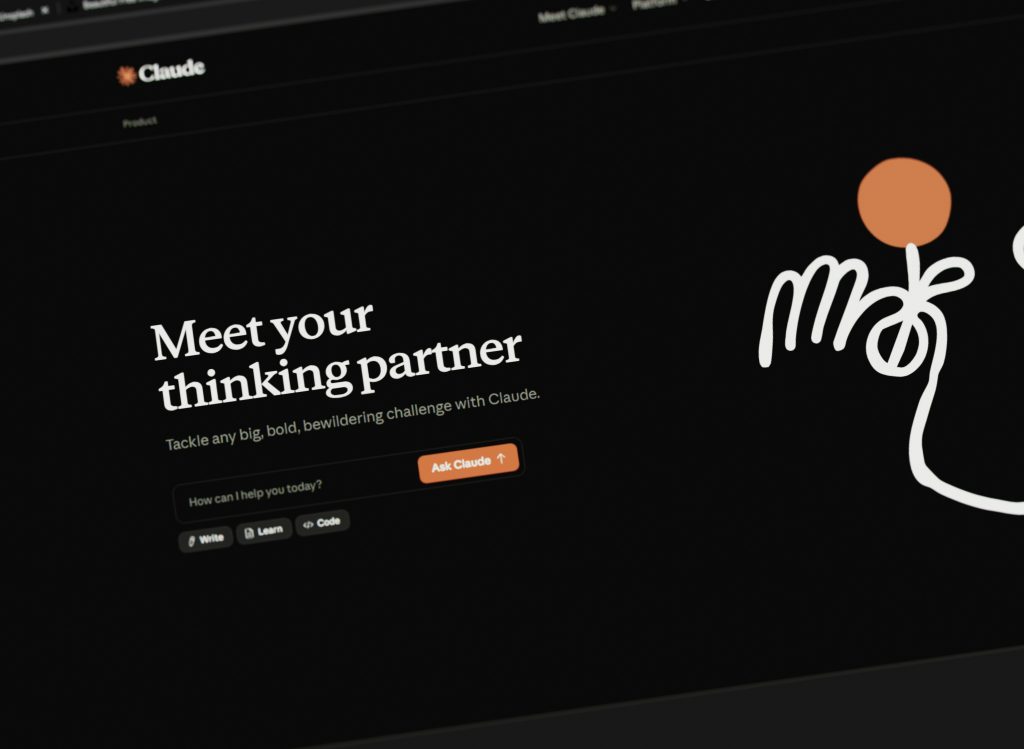
Claude is available in several formats, allowing you to tailor your experience to your needs—from occasional prompts in your browser to full integration with your own app.
Where and how can I use Claude (app, browser, API)?
There are several ways to use Claude:
- via the web application on claude.ai and mobile and desktop applications,
- via the Claude API, which allows developers to embed Anthropic models into their own products and systems,
- through integration with popular work environments such as code editors or office suites.
Thanks to the API, companies can use Claude not only as a chatbot, but also as an "engine" embedded in a larger system—for example, a customer service tool, an internal document search engine, or an analytical application. This is, in fact, the direction in which more and more online stores are developing. To learn more about how AI is changing e-commerce, read the article " How the Increased Use of AI Will Impact Online Store Management."
What subscription plans does Anthropic offer?
For individuals and businesses, Anthropic offers several subscription plans with varying usage limits and feature sets—from free access, to a Pro plan with higher limits for heavy Claude users, and to team and enterprise plans (Team, Enterprise) with additional features for managing access and collaboration in larger organizations. It's worth checking the exact scope and limits of individual plans directly on the Anthropic website, as these plans are subject to change.
Is Claude worth using?
Claude stands out from other AI assistants by treating security and reliability of responses as a foundation, not an afterthought. For users, this means a tool that's equally at home in everyday office work and more demanding tasks like writing, data analysis, and programming.
Is it worth using? If you're looking for an assistant for everyday texting or research tasks, the free version or Pro plan will likely suffice. However, if you're planning to build your own tool or automate repetitive processes within your company, it's worth taking a closer look at the capabilities of the Claude API. And if you're interested in using similar AI tools to boost your store's visibility on Google, check out our SEO Content Total, which combines SEO with AI-powered content creation.