

Contents
What?
This article focuses on optimizing e-commerce logistics processes, which allows for faster order fulfillment in online stores. Readers will learn what actions can be taken to streamline logistics and increase customer satisfaction. It will also describe the key benefits of implementing automation and integration in e-commerce processes.
Why?
Optimizing logistics processes is becoming crucial in an era of increasing competition in the e-commerce market. Online store owners often struggle with on-time delivery, leading to customer dissatisfaction and declining sales. Implementing effective logistics solutions can significantly improve operational efficiency and increase conversion rates.
For whom?
This article is aimed at online store owners, e-commerce managers, and marketing specialists responsible for optimizing e-commerce sales and logistics processes. It will be particularly useful for those seeking practical solutions to increase the efficiency of their online businesses.
Background to the topic.
The e-commerce market in Poland is growing rapidly, presenting online stores with a number of challenges. Customers are becoming increasingly demanding, expecting fast order fulfillment and flexible delivery options. Faced with global competition and rising customer expectations, businesses must continually improve their logistics processes to remain competitive.
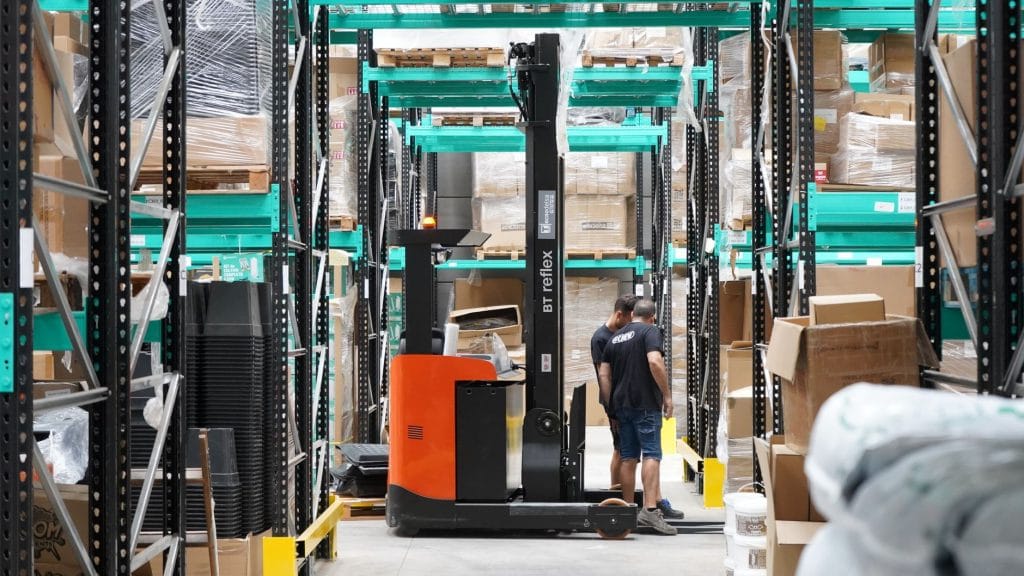
In the world of e-commerce , efficient and fast order fulfillment is crucial , directly impacting customer satisfaction and willingness to purchase again. Logistics processes are often the Achilles' heel for many online stores. Owners struggle with delivery delays, insufficient inventory control, and inefficient packaging. Optimizing e-commerce logistics processes can benefit both operating costs and improved sales results, which is essential for any sales platform.
Logistics automation in e-commerce
One of the first steps in optimizing logistics processes is implementing automation, which significantly reduces order processing time. Automation can encompass processes such as order acceptance, inventory management, and supplier communication.
For example, systems like ERP or dedicated warehouse management solutions can significantly accelerate the order fulfillment process. This minimizes the risk of errors associated with manual data management and frees up time that can be devoted to other key areas of the business. Automation contributes to increased accuracy in demand forecasting, which ultimately allows for better resource management.
Key elements of e-commerce automation:
- Integration of ERP and WMS systems.
- Automatic generation and printing of shipping labels.
- Data synchronization between sales platforms.
- Automatic notifications to customers about order status.
By using these tools, online stores can significantly improve the logistics process, reducing the risk of errors and delays.
Integration of sales and logistics systems
Another important aspect of logistics optimization is the integration of sales and logistics systems. This enables seamless data transfer between various platforms and tools, which in turn streamlines the entire supply chain. Systems like IdoSell, WooCommerce, and Shopify can be effectively integrated with ERP tools to automatically update order statuses and inventory levels.
Implementing APIs for integration between different systems allows for greater flexibility and customization to specific business needs, which is crucial in competitive industries. Integration enables real-time inventory synchronization, eliminating errors related to out-of-stocks.
Basic steps in system integration:
- Identify needs and processes requiring integration.
- Select appropriate integration tools and platforms (e.g. Baselinker).
- Configure data flow between systems.
- Test integration at various stages of implementation.
Integration allows for much more efficient order management and minimizes the risk of errors when entering data manually.
Case study: Improving logistics efficiency at Action.pl
In one of the implementation projects conducted for the online store Action.pl, we identified key areas requiring improvement in logistics. The store was struggling with frequent delays in order fulfillment, which resulted in declining customer reviews.
The project began with the automation of the packaging process and the implementation of a real-time order tracking system. Solutions were implemented to automatically update inventory levels, which reduced the number of errors in order fulfillment.
The result was a 30% reduction in average order fulfillment time, significantly improving customer satisfaction and brand image. Thanks to automation and improved integration, Action.pl was able to increase the volume of orders processed by approximately 20%.
Implementation conclusions: It is crucial to adapt solutions to the specific nature of the business and thoroughly test integration modules before full implementation, which minimizes the risk of potential problems.
Tools supporting logistics optimization in e-commerce
Optimizing logistics processes in e-commerce requires the use of effective tools that can significantly improve online store operations. Examples include Baselinker, which facilitates integration between various sales channels, and ERP tools that automate resource management.
ERP systems help monitor inventory and forecast demand, which is crucial for reducing warehousing costs and improving operational efficiency. Warehouse management applications, such as WMS, also integrate various stages of logistics, providing better control over orders.
Additionally, platforms such as Google Search Console can support the analysis of data on more technical aspects of a store's operation, which translates into better search results and, therefore, increased website traffic.
Achieving high efficiency by streamlining logistics
Optimizing logistics processes directly improves financial performance and customer satisfaction. Through effective supply chain management and the automation of key processes, stores can increase their competitiveness and efficiency.
Resource management and logistics are key elements that must be harmoniously aligned with the overall e-commerce strategy. On-time order fulfillment, cost optimization, and minimizing delivery errors are goals that can be achieved through effective logistics operations.
Businesses should constantly monitor the effectiveness of their supply chain so that they can quickly respond to changing market and customer needs and test new solutions without fear of disruption.
Drawing conclusions and planning future activities in logistics
A key step in building competitiveness in the e-commerce market is regularly analyzing results and drawing conclusions from implemented activities. This allows online stores to systematically improve their processes and better adapt to customer expectations.
During your analysis, focus on a few key areas:
- Evaluation of delivery efficiency (delivery time, costs).
- Speed of inventory updates.
- Customer satisfaction with the purchasing and delivery process.
- Competitiveness in the logistics market.
Remember to leverage technologies that support e-commerce process automation and integration. Automation and integration can significantly simplify this process and improve store efficiency.
To benefit from professional optimization support, consider partnering with an agency that can help you implement modern logistics solutions. Click hereto learn more about how to work with a team of specialists.